Few breeds capture the essence of companionship quite like the Golden Retriever!

Bred in the Scottish Highlands for retrieving game over land and water, the Golden’s intelligence, patience, and cheerful spirit soon earned it a place far beyond the field.
Today, this gentle and capable dog is as much a fixture in family homes worldwide as it is in therapy work, search and rescue, and assistance roles.
In the following sections, we are going to look honestly at both the joys and the challenges of living with one of America’s most beloved dogs, and what every potential owner should know before bringing home a Golden puppy.
Goldens are not without their problems. Health concerns such as cancer and orthopedic problems are well documented, and research into improving the outlook for these lovely dogs is ongoing. So we’ll be talking about that too!
Let’s start by tracking the origins of our Golden friends, and looking at the traits that have made them so sought after.
Origins
Golden Retrievers are closely related to Flat Coated Retrievers. Our Golden story starts way back in the early 1800’s in Scotland, where Lord Tweedmouth was thought to have mated an unusual yellow Flat Coat with a Tweed Spaniel.
The Tweed Spaniel is now sadly extinct but their golden descendents have thrived!
Irish Setters and possibly Bloodhounds also formed a part of their early breeding program refining the scenting ability, stamina, and temperament of the new breed.

These gorgeous dogs were exhibited under the category of Flat Coated Retrievers until the early 1900’s, and were given their own category of Golden Retrievers in 1920.
The breed was finally recognized in the USA in 1932 and is now one of the most popular and loved dog breeds in the world
Breed Characteristics
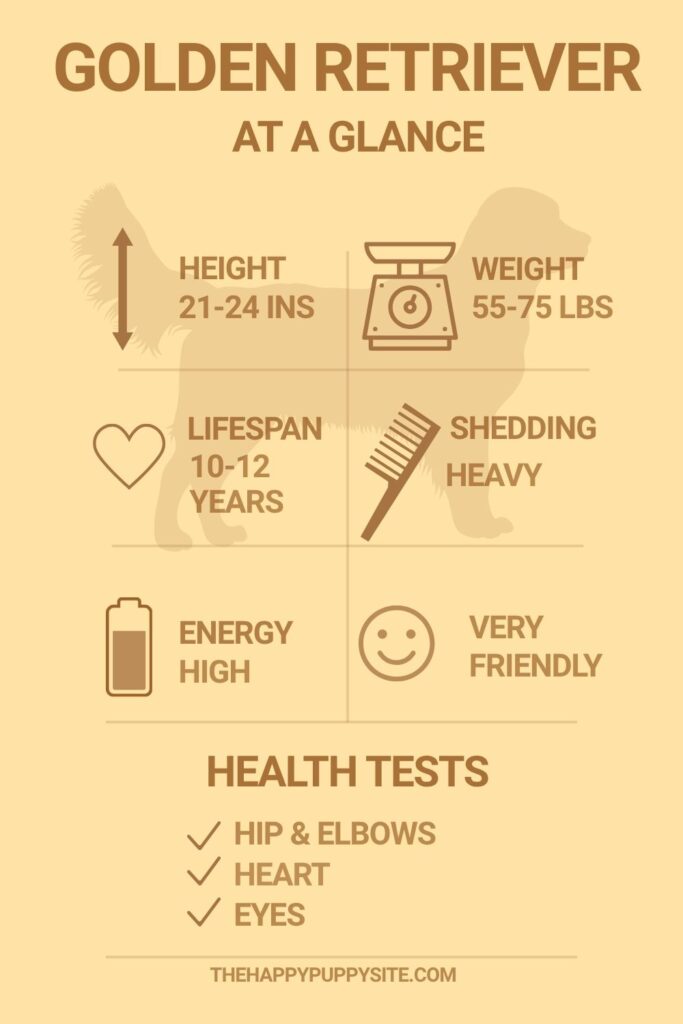
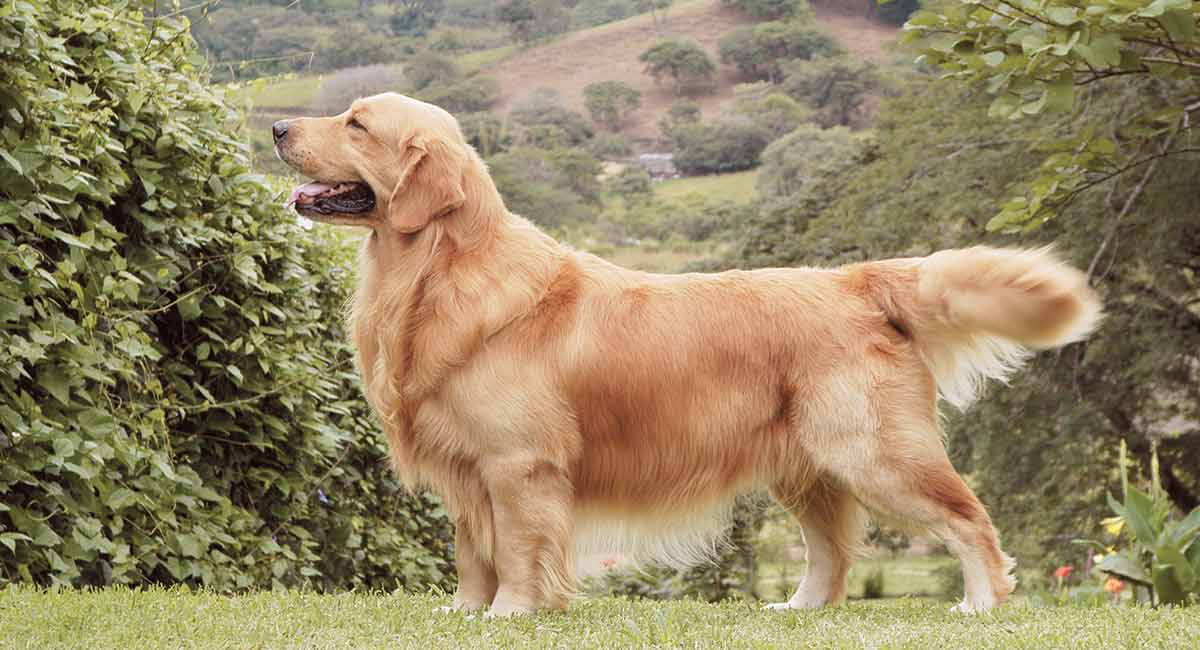
Golden Retrievers are large, athletic, well balanced dogs. Males stand about 23 to 24 inches tall at the shoulder and weigh 65 to 75 pounds, while females are slightly smaller at 21.5 to 22.5 inches and 55 to 65 pounds.
Their double coat consists of a dense, water-resistant underlayer and a thick, wavy or straight outer coat that sheds year-round. Coat type and color can vary quite widely. And while shorter haired goldens do exist, most have longer hair especially around the chest, ears and trousers.

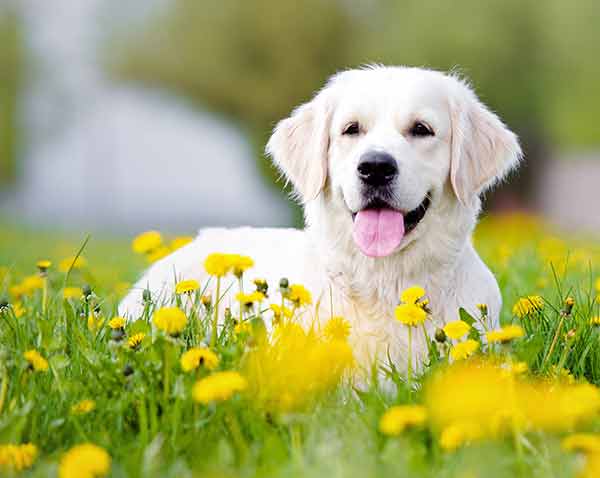
The texture of the fur can range from very wavy to almost flat, and shaded from lightest cream to dark gold. The AKC recognizes all shades of gold, from light cream to deep russet, though excessive paleness or whiteness is discouraged in the show ring.
Different types
Like several sporting breeds, the Golden Retriever has in recent years become somewhat divided. Into those bred for the show ring and those intended for working uses. The division is not as pronounced as with some breeds but it is worth mentioning. If you are looking for a hunting companion you will need to chose a puppy from working lines.
Show bred Golden Retrievers tend to be broader in the chest and skull and have paler, thicker coats. Working bred Golden Retrievers have a slighter, more pointed skull, rangier legs and a shorter, darker, thinner coat.
Their general appearance though is similar, and their temperaments again do not differ to a great degree. You will probably find a show bred dog slightly less serious and a little less mature. And a working bred dog might look a little less like the postcard Goldie.
Temperament
Golden Retrievers are not just a pretty face. Their popularity is in large part due to their intelligent, friendly, and affectionate personality.
This is a dog that thrives on human company and excels in cooperative tasks — from field trials and obedience to search and rescue and therapy work. And usually gets on well with children and other animals.
While their sociable nature makes them poor guard dogs, it also makes Goldens one of the most beloved family companions in the world. And while they probably won’t eat the mailman, most Goldens will still let you know who’s about.
Health, Screening and Tests
The Golden Retriever is not only one of America’s most beloved breeds —it is also one of the most intensively studied due to its health challenges.
Over the past two decades, research has revealed that Golden Retrievers face above-average rates of certain inherited diseases, especially cancers and orthopedic disorders. This has led to large-scale studies such as the Morris Animal Foundation’s Golden Retriever Lifetime Study, which continues to track thousands of dogs across the U.S. to identify environmental and genetic risk factors for disease.
The most common health issues in the breed include hip and elbow dysplasia, progressive retinal atrophy (PRA), subvalvular aortic stenosis (SAS), hypothyroidism, and several types of cancer, notably hemangiosarcoma, lymphoma, and mast cell tumors. Joint problems such as hip and elbow dysplasia can be significantly reduced through responsible breeding and screening with OFA radiographs. Eye diseases like PRA and hereditary cataracts are preventable through DNA and ophthalmic certification.
Like many large breeds, Golden Retrievers are also sensitive to early neutering, which has been associated with a higher incidence of joint disorders and certain cancers, particularly in males. Maintaining a healthy body weight and providing low-impact exercise can reduce orthopedic strain. Responsible breeders today are using genetic testing, cardiac screening, and ophthalmic certification to lower the risk of serious disease in future generations.

Breed Health Statistics
Golden Retrievers typically live 10 to 12 years, with the median age of death reported around 11 years in both U.S. and U.K. surveys. Unfortunately, cancer is the leading cause of death, accounting for roughly 60% of all fatalities — among the highest of any breed. The Golden Retriever Lifetime Study has confirmed that hemangiosarcoma, lymphoma, and mast cell tumors are especially prevalent.
Other significant causes of death include neurological disease, cardiac disease (notably SAS), and musculoskeletal disorders. Insurance and VetCompass data indicate above-average claims for tumors, skin allergies, and orthopedic treatments. Despite these concerns, well-bred Goldens remain generally sound dogs capable of long, active lives when bred from health-tested parents.
The average Coefficient of Inbreeding (COI) for Golden Retrievers registered with the American Kennel Club is approximately 7%, comparable to the U.K. Kennel Club figure of 8.6%, though some popular sire lineages show considerably higher levels. A lower COI indicates greater genetic diversity and may reduce the risk of inherited disease. For a breed of this size, the Golden Retriever’s average lifespan is moderate but below the expected range for large retrievers, largely due to its cancer burden.

Recommended Health Tests (U.S. Programs)
Health screening is essential in this breed. Prospective owners should ask breeders to show certification from the Orthopedic Foundation for Animals (OFA) or Canine Health Information Center (CHIC). The CHIC program collects and publishes verified health test results, helping breeders make transparent and responsible decisions.
| Test & Type | Purpose | Age | CHIC Required (Y/N) |
| OFA Hip Dysplasia (Radiograph) | Detects inherited hip laxity and arthritis risk | ≥ 24 months | ✅ |
| OFA Elbow Dysplasia (Radiograph) | Screens for elbow joint malformation | ≥ 24 months | ✅ |
| OFA Eye Certification / CAER (Ophthalmic Exam) | Identifies inherited eye disorders such as PRA and cataracts | annually | ✅ |
| Cardiac Evaluation (Auscultation or Echocardiogram) | Detects congenital heart disease, especially subvalvular aortic stenosis | ≥ 12 months | ✅ |
| DNA – PRA1, PRA2, prcd-PRA | Detects mutations causing progressive retinal atrophy | any age | ✅ |
| DNA – Ichthyosis | Identifies carriers of the hereditary skin condition “Ichthyosis” | any age | ✅ |
| Thyroid Evaluation (Blood Test) | Screens for autoimmune hypothyroidism | ≥ 12 months | ❌ |
Breeders should be enrolled in the CHIC program and publicly list their results. Buyers can verify a breeder’s test results on the OFA database (ofa.org) using the dog’s registered name or number. Never accept verbal assurances alone — always ask to see certificates and verify online before placing a deposit on a puppy.
Key Health Findings
- Median lifespan: ≈11 years
- ~60% of deaths attributed to cancer (notably hemangiosarcoma and lymphoma)
- Hip dysplasia rate: ~20% (OFA database); elbow dysplasia: ~11%
- Early neutering increases risk of joint disorders and some cancers
- COI: ~7% (U.S.) — moderate but can vary by lineage
- Cardiac disease (SAS) remains a concern; screening essential
- DNA tests for PRA, Ichthyosis, and other inherited traits now widely available
Golden Retrievers remain one of the most affectionate and versatile breeds, but they require careful, evidence-based breeding to counter high rates of inherited disease.
With informed selection and preventive care, many Golden Retrievers have the potential to live long, healthy lives. But if you want to buy a puppy it’s important to work only with breeders who perform all OFA/CHIC-recommended tests and share verifiable results.
General Care
If you want your dog to live in an outdoor kennel this is probably not the breed for you. Goldens do not enjoy being left alone for long hours or confined to a small space, but thrive on company and purpose.
Exercise
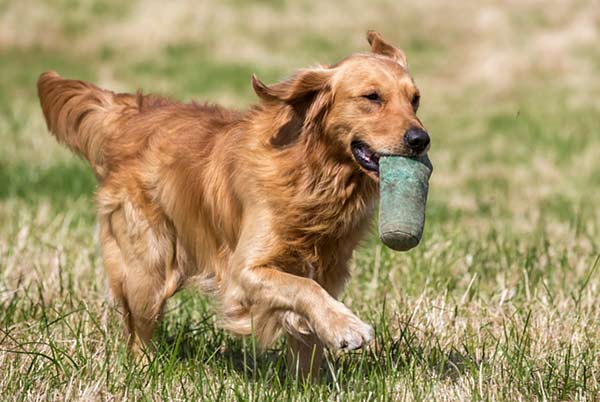
A healthy adult Golden Retriever needs around an hour and a half to two hours of exercise every day. This can be divided into walks, play, and more focused activities such as retrieving games or swimming. They are happiest when they have both physical and mental challenges — obedience training, scent games, or agility are ideal ways to keep that active brain engaged.
Training and socialization
Golden Retrievers are relatively easy to train, which is good because these are strong, energetic dogs and early training will ensure that you don’t spend the next few years picking up knocked over guests. Or being dragged around at the end of a leash on walks!
A well-socialized Golden is typically confident and gentle, but like all dogs, they need careful exposure to new sights, sounds, people, and pets during puppyhood to prevent nervousness later on.
Grooming
That fabulous coat takes a bit of looking after. So if you are looking for a dog with a low maintenance coat, then again, a Golden Retriever is probably not the right dog for you. These are profusely shedding dogs, and their long fur will form mats if left untended for too long.
A good quality dog brush and an excellent dog hair approved vacuum cleaner are essential items for the Golden Retriever owner. Regular ear cleaning and keeping the fur close to the inner ear cut short will all help to reduce the chances of ear infections.
Diet
Goldens have a hearty appetite, and weight gain can creep up unnoticed. Feed a high-quality diet appropriate for your dog’s age and activity level, adjust portions according to your dog’s look and feel, and avoid too many calorie-rich treats.
Neutering
When it comes to neutering, current research is leaning towards waiting until physical maturity — often around 18 months — especially for large breeds like the Golden Retriever. Early neutering has been linked to an increased risk of orthopedic problems and certain cancers in this breed, so timing and even whether you need to neuter at all, is something to discuss carefully with your veterinarian.
Finding Puppies
Good Golden Retriever breeders will health test both parents, and only breed from dogs with excellent hips, elbows and eyes. As well as temperaments! They’ll not only be happy to show you evidence of these health tests, they’ll be delighted to answer any questions you might have.
They will make an effort to socialize the puppies when they are still with them, feed them a high quality food and make sure they spend lots of time around the human members of the family. The mother will have a strong bond with their owner, and a purpose beyond producing puppies! Either as a working, show or companion dog.
A purebred Golden Retriever puppy from a reputable breeder in the USA may cost you between $1,500 and $2,500. In the UK you won’t get a lot of change from £1000 for a purebred Goldie pup. Prices may vary according to how titled the parents are (either in the show ring or as hunting dogs)
 (paid link)
 And prices may be higher in some regions than others.
Final thoughts
The Golden Retriever’s enduring appeal lies in its generous nature. But this is not a particularly low maintenance pet.
There will be mud. And there will be hair. Lots of it.
And you need to be ok with that.
This is a dog that needs company as well as grooming. Left alone or under-stimulated, Goldens can become anxious or destructive.
That’s the bad news. The good news is very good!
With regular exercise, consistent training, and daily companionship, a Golden Retriever becomes the kind of family dog most people dream about — gentle, loyal, and full of joy.
Yes, they do demand time, space, and commitment. But if you can provide those, the rewards will be great.
You will have a dog to be proud of. A friend that will happily accompany you wherever you go, get along with whoever they meet and who will repay you with years of love and laughter along the way.

marjan says
Hello everyone! My golden Retriever’s name is Simba he’s 2 years age hes color is golden, he like go a park and play whit me!
Mo says
Hi, our golden is 15 and a half plus. We would like a rubber cover for the orthopedic bed, wondering if you have a link for one please. She is so good, just starting to poop in her sleep, wants outside until we clean the bed and then wants straight back in again. Too uncomfortable to hang around as her wee joints have become so weak. We do have two beds for her but we need the bed neasy changed one sui she can get back in ASAP.. she has a bed downstairs fur tea time and one outside too but it’s there night time one they she’s so comfortable in, the one we need to make right asap. Thank you
Mo says
Sorry everyone, a few typos. I have her picture which I will post
Amy says
My 8 month old female golden weights about 50 lbs . Is she over weight? I don’t feel that she is but when people see her they say she is big for her age.
pankaj says
i went
.
Jo says
is a golden retriever a good famaly pet
Jo says
a little
PETER EDGETTE says
MY GOLDEN IS A SHORT HAIR,COMPARED TO HIS BROTHERS AND SISTERS. I DO HAVE HIS AKC REGISTRATION PAPERS,AND BOUGHT HIM FROM A BREEDER WHEN HE WAS 8 WEEKS OLD,AS I SAID ALL THE OTHER PUPS WERE LONG HAIR…QUESTION, ARE THERE SOME GOLDENS WHO HAVE SHORTER HAIR?,,HAVE I BEEN DELUSIONAL FOR THE PAST 9 YEARS?
Olive says
Golden Retrievers are literally angels sent from heaven, they’re just so pure and amazing
Susan says
Do all golden retrievers drool?
BJ says
Golden Retrievers are not likely to drool
kate says
Hi,
I’d add to your physical description of golden retrievers that the dogs smell pretty doggy (esp compared to short-coated or non-shedding types of dogs). Some people really dislike doggy odor, and if they do, they shouldn’t get a golden retriever.
(the odor is also a risk in golden doodles.)
Enrique Silva says
Lucy do you have a telephone number , where a can talk to you , i need use the picture of a puppy in your site. i needed for a magazine. if you can help to me for a contact the owner . my phone number is 521 442 4647842
tank you very much.
Enrique Silva
Nunya says
It is Thank You very much not Tank you very much.