Torn between a Bernese Mountain Dog and a Newfoundland? It’s a tough one! Both breeds are affectionate, fluffy giants with a reputation for loyalty and devotion to their families.
At first glance, they might look quite similar, but there are distinctive differences in their histories, temperaments, and even their size.
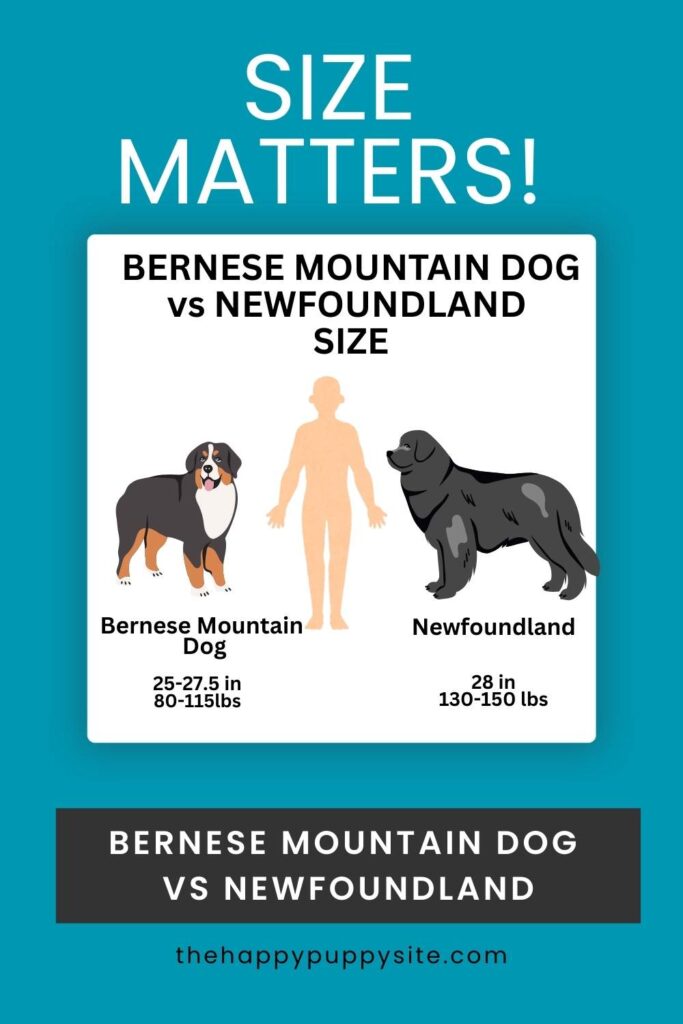
In this guide, we are going to walk through the key differences and similarities between the two breeds, from puppyhood to adulthood. You’ll learn how big each one gets, what kind of exercise and grooming they really need, and which health issues prospective owners should be aware of.
Let’s start with a quick look at where each breed comes from and the jobs they were originally bred to do.
Breed Origins
The Bernese Mountain Dog, or Berner, comes from the Swiss Alps and was originally bred as a hard working farm dog. These dogs were very versatile, pulling carts, driving cattle, and guarding homesteads. But by the early 20th century their numbers dwindled.
Dedicated breeders in Switzerland have helped to revive the breed. And today Berners retain their working qualities, are equally prized as affectionate family companions, and their popularity has spread around the world
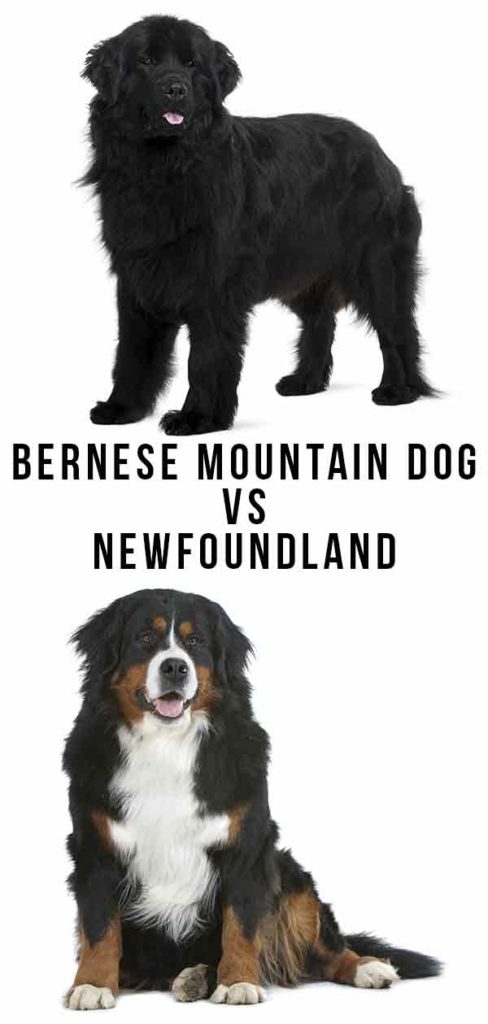
The Newfoundland, or Newfie, has very different roots, sharing their ancestors with the Labrador Retriever.
Bred on the rugged coast of Canada, these massive dogs were partners to fishermen. Their thick, water-resistant coats and natural swimming ability made them ideal for hauling nets and even rescuing people from icy waters.
While modern Newfies aren’t hauling fish anymore, they’re still used in water rescue work — and they’re famous for their patience and gentle nature with children.
If you haven’t read “Laura, Alice’s New Puppy” by Phillipe Dumas, try to get hold of a copy – it sums up the essence of the Newfoundland breed in a delightful and unforgettable children’s story. (It will make you want a Newfie puppy – you have been warned!)
Quick Comparison:
| Feature | Bernese Mountain Dog | Newfoundland |
|---|---|---|
| Breed Type | Large working dog (farm) | Giant working dog (water rescue) |
| Weight (Male) | 80–115 lbs | 130–150 lbs |
| Height (Male) | 25–27.5 in | ~28 in |
| Lifespan | 7–10 years | 9–12 years |
| Temperament | Loyal, energetic, affectionate | Gentle, patient, protective |
| Grooming Needs | Heavy shedding, frequent brushing | Heavy shedding, frequent brushing + drool |
| Exercise Needs | 30+ mins/day, enjoys hiking | 30+ mins/day, loves swimming |
| Best For | Active families, cooler climates | Families with kids, homes near water |
Coat & Appearance
Both breeds are admired for their striking coats. But we are talking some serious fur here. So if you live in a warm climate you do need to consider carefully how one of these very thick coated breeds is going to cope. It will depend on how long your summers are, how hot it gets, and whether you have somewhere for your dog to cool down when they need to (water, air conditioning, etc)
The Bernese Mountain Dog has a thick, medium-length double coat with distinctive tri-color markings: black, rust, and white. This classic pattern is one of the breed’s trademarks. They are very pretty indeed
The Newfoundland has a long, water-resistant outer coat and a dense undercoat that helps them thrive in cold water. While solid black is the most common, they also come in brown, gray, or black-and-white (called the Landseer pattern). Breed standards are a little more flexible for Newfies than they are for Berners.
Grooming Needs
Be prepared for hair — lots of it. And not just on your dog.
Berners shed heavily, especially during seasonal coat changes. Brushing two to three times a week is usually enough, but daily sessions are best when they’re “blowing” their undercoat.
Newfoundlands shed just as much, if not more, and their longer coats require frequent brushing to prevent mats. Both breeds should be kept in their natural state with minimal trimming, and they should never be shaved, as their double coats protect them from both heat and cold.
A dog that needs regular grooming needs to learn to stands still and be brushed from an early age. So you’ll need to get your dog used to being groomed from puppyhood, even though the puppy coat is shorter and more manageable.
We should probably mention ‘drool’ at this point. Remember the film ‘Beethoven’? Well that was St Bernard, but the drool situation in Newfies is similar. Big dogs do tend to drool. And some Newfies drool quite a lot. So you need to decide if that will bother you.
Temperament
Both Berners and Newfies have well-earned reputations as affectionate, family-friendly dogs, and there’s really not a lot to choose between them in this respect.
The Berner is loyal, calm, and eager to please. As working dogs, they are intelligent and thrive when given tasks or training challenges.
The Newfoundland is famous for its gentle, patient nature — often nicknamed the “gentle giant.” Their steady temperament makes them especially good with children.
Both breeds are social, people-oriented, and happiest when included in family life.
Training & Socialization
When your dog is the size of a small pony, there’s plenty of scope for accidental damage. Both to property and people. So with dogs this large, good manners are essential. Even the gentlest Newfie or Berner can accidentally knock someone over if poorly trained.
Both breeds respond best to positive reinforcement methods, such as treats, toys, and praise. Berners are especially sensitive and may shut down with harsh corrections.
Early socialization is key — introducing puppies to new people, places, and situations helps prevent shyness or overexcitement later on. For families with young children, a well-trained Newfie can be a safe and steady companion, while Berners enjoy more active, structured training activities.
Exercise Requirements
If you are looking for a dog to accompany you while you train for a marathon, these are probably not the breeds for you. Despite their size, neither breed needs endless hours of running. What they do need is consistent, moderate exercise.
- Bernese Mountain Dogs: At least 30 minutes a day of brisk walking or outdoor play. They enjoy hiking and can even enjoy sports such as agility or obedience trials thanks to their higher energy levels compared to Newfies.
- Newfoundlands: Also need daily activity, but at a gentler pace. This is a dog that lives to swim and play around in water. So if you live near a lake or beach, they’ll be in their element. And if you just happen to be a beach life guard, this could be a match made in heaven.
Both breeds are working dogs, but of the two, the Berner tends to be more energetic, while the Newfie has a calmer, steadier pace.
Health Considerations
You may have heard that giant dogs don’t live as long as small dogs. And there is some truth in that.
Bernese Mountain Dog
Berners are prone to inherited joint issues like hip and elbow dysplasia. They can also develop hypothyroidism, which affects metabolism, skin, and coat health. But perhaps the most challenging problem in the breed is their high incidence of cancer.
Some studies have put the cancer rate in Bernese Mountain Dogs as high as 50%. As a result, sadly, their average lifespan is relatively short: just 7–10 years.
Newfoundland
Newfies share the risk of hip and elbow dysplasia, but in common with some other giant breeds, heart conditions are a bigger concern for this breed (including subaortic stenosis and dilated cardiomyopathy). They can also inherit a urinary disorder called cystinuria, which can cause painful blockages.
Keeping Either Breed Healthy
Choosing a reputable breeder is the best step you can take to reduce the risk of inherited conditions. Responsible breeders test for joint, thyroid, and heart issues and provide documentation of results. Puppy mills and backyard breeders, by contrast, often skip health testing.
If you are thinking of a Berner, aim to find a breeder with a lower than average incidence of cancer in their lines.
It’s also worth considering choosing puppies from an older stud dog. If he made it into his second decade, that bodes well for a lower risk for his puppies.
With Newfies, focus on lines with a lower incidence of heart problems. At the end of the day, while no breed is free of health risks, Newfoundlands do tend to live longer than Berners, despite their giant size. And this is definitely worth keeping in mind.
Joint care
Remember that large breed, and especially giant breeds, need their joints protecting as they grow. So be careful not to overexercise your puppy. And to bear in mind that growth can continue for the first two years in big dogs.
Living With a Berner vs. a Newfie
So, which breed is the better fit? It’s going to depend on your lifestyle and living situation.
- Choose a Bernese Mountain Dog if you want a slightly smaller (yet still large) dog with higher energy, well-suited to active families who enjoy hiking or outdoor adventures.
- Choose a Newfoundland if you’re ready for a true giant with a calm, patient temperament — especially if you have children or live near water.
Both breeds need space, commitment to grooming, and families who don’t mind heavy shedding (and in the Newfie’s case, plenty of drool!).
Whatever your choice, do your homework carefully to ensure that you choose a breeder who is committed to promoting the health of the breed.
A good breeder will be an endless source of knowledge and support as set out on your exciting adventure with the puppy of your dreams!
References and Resources
Bernese Mountain Dog. American Kennel Club.
 (paid link)
 Newfoundland. American Kennel Club.
Fries, C.L., Remedios, A.M. The Pathogenesis and Diagnosis of Canine Hip Dysplasia: A Review. The Canadian Veterinary Journal, 1995.
Clayton Jones, G. Elbow Dysplasia in Dogs. The British Veterinary Association and The Kennel Club, 2017.
Hypothyroidism in Dogs. Washington State University College of Veterinary Medicine.
Health Conditions and Diseases Known to Affect Bernese Mountain Dogs. The Bernese Mountain Dog Club of America, 2011.
Meurs, K.M. Inherited Heart Disease in the Dog. Tufts’ Canine and Feline Breeding and Genetics Conference, 2003.
Newfoundland: Cystinuria and Urolithiasis. Universities Federation for Animal Welfare, 2016.
Canine Disorders Known to Affect Newfoundlands. Newfoundland Club of America, 2016.
Meek, et al. Identification of a Hypomorphic FANCG Variant in Bernese Mountain Dogs. Genes, 2022

Leave a Reply